Blogs

Law as a System Under Institutional Pressure

This teaching series examines how law operates not as a collection of isolated doctrines but as an integrated system that shapes infrastructure, governance, environmental resilience, and financial survival. Across four interconnected courses—Energy Policy, Technology Law, Climate Change Law, and Secured Transactions—the reflections explore how legal architecture designs complex systems, allocates authority, absorbs stress, and ultimately […]

Read More

Secured Transactions: Risk, Collateral, and System Survival

This reflection turns to Secured Transactions as the quiet structural foundation beneath energy, technology, and climate governance. Original post: Commercial law rarely attracts the same public attention as climate litigation or technological regulation. Yet, the secured transactions law plays a decisive role in structuring resilience. Financing frameworks, collateral regimes, and priority rules determine how credit […]

Read More

Climate Change Law: Governance Under Systemic Stress

This reflection focuses on Climate Change Law as a sustained institutional stress test within the broader teaching series. Original post: Climate change does not present a single dispute or isolated regulatory problem. It imposes prolonged and structural pressure on legal systems themselves. Traditional doctrines—causation, standing, jurisdiction, proportionality—were developed within frameworks designed to resolve discrete harms. […]

Read More

Technology Law: Governance, Power, and Legal Architecture

This reflection builds on the broader teaching series and focuses specifically on Technology Law as a framework for understanding institutional power in digital environments. Original post: Technology law is no longer confined to questions of innovation policy or data protection compliance. Digital systems now structure public administration, energy governance, financial markets, and even climate monitoring. […]

Read More

Energy Policy and the Law in Action

Energy policy is often discussed in the language of innovation, infrastructure expansion, and market reform. Yet beneath these visible transitions lies a deeper reality: energy systems are fundamentally legal constructions. They are shaped not only by engineering or economics, but by regulatory frameworks, institutional authority, and carefully structured market rules. Read original post: This reflection […]

Read More

Regional Power and the Future of Global Law

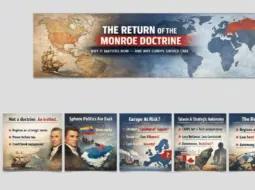
This concluding post brings together the core insights of the series and clarifies what is truly at stake in the transformation of global order. Across Parts 4.1-4.4, a structural pattern emerged. What began with the return of Monroe-style regional logic expanded into an examination of networked power in the Indo-Pacific, the transformation of legal geography, […]

Read More

Legal Fragmentation and Global Governance Shift

International law is no longer fragmented by accident. Fragmentation has become a structural feature of global governance. For decades, the dominant narrative assumed a gradual movement toward universal multilateralism — a coherent legal order guided by shared norms and centralized institutions. That assumption is now under pressure. Today, global governance operates through overlapping regimes, regional […]

Read More

Legal Geography and the New Global Order

Global politics today is not only shifting in terms of power — it is shifting in terms of legal space. The transformation underway is best understood through the concept of legal geography: how law organizes territory, connectivity, access, and authority. What was once imagined as a universal legal order is increasingly structured through differentiated regional […]

Read More

The Indo-Pacific and Networked Power

The contemporary return of Monroe-style thinking is not territorial — it is architectural. If the 19th-century Monroe Doctrine was about excluding rival empires from the Western Hemisphere, today’s regional strategies operate through design: building networks, shaping standards, and structuring dependence. The Indo-Pacific Strategy reflects this evolution. Rather than declaring exclusive control, the United States consolidates […]

Read More

The Return of the Monroe Doctrine Today

The Monroe Doctrine is often treated as a relic of 19th-century diplomacy. Yet its core strategic instinct — that geography and power justify privileged regional authority — appears to be re-emerging in contemporary geopolitics. Today, the doctrine does not return as formal policy. Instead, it resurfaces as structure. The logic is visible in how regional […]

Read More