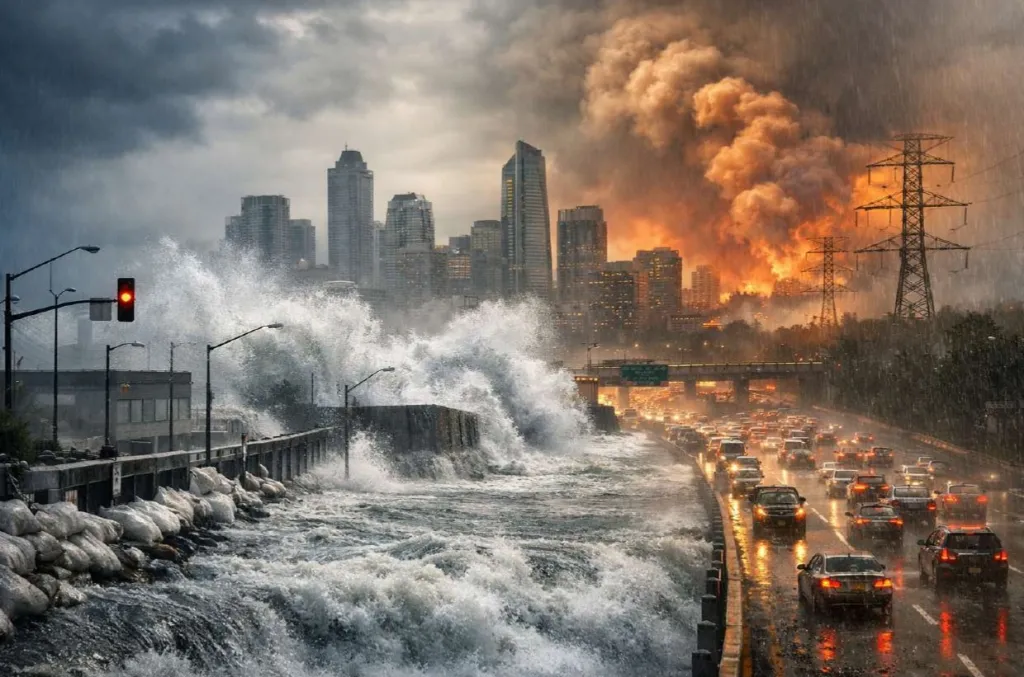
This reflection focuses on Climate Change Law as a sustained institutional stress test within the broader teaching series.
Original post:
Climate change does not present a single dispute or isolated regulatory problem. It imposes prolonged and structural pressure on legal systems themselves. Traditional doctrines—causation, standing, jurisdiction, proportionality—were developed within frameworks designed to resolve discrete harms. Climate disruption, by contrast, unfolds over decades, across jurisdictions, and across generations.
This course examines how environmental instability challenges institutional capacity. Courts must confront diffuse responsibility. Regulators must operate under scientific uncertainty. Legislatures must balance long-term sustainability against immediate political and economic pressures. In this context, law is not simply applied—it is tested.
A central theme explored in the classroom is temporal strain. Legal systems are structured around short electoral cycles, procedural timelines, and reactive enforcement mechanisms. Climate governance requires anticipatory design, adaptive regulation, and cross-border coordination. Students analyze how international agreements, domestic regulatory frameworks, and strategic litigation attempt to reconcile doctrinal coherence with systemic urgency.
The course also highlights how climate risk materializes through infrastructure and finance. Environmental stress does not remain abstract; it affects markets, investment structures, insurance regimes, and energy systems. Law becomes the medium through which responsibility is distributed, and resilience is structured.
By framing climate law as governance under sustained stress, this reflection demonstrates how environmental pressure reveals both the strengths and limitations of institutional design.
To understand how financial and commercial law ultimately determines which systems survive disruption, continue with the next reflection in this series: