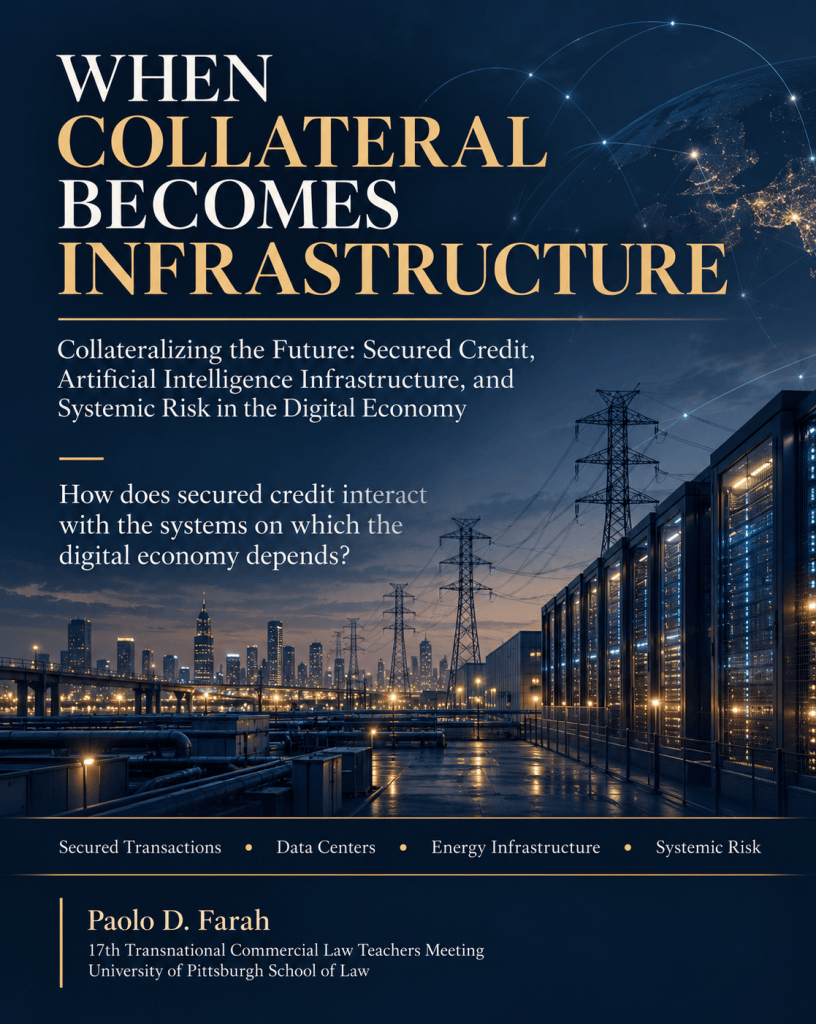
When Collateral Becomes Infrastructure
The second paper I presented at the 17th Transnational Commercial Law Teachers Meeting at the University of Pittsburgh School of Law examines a question that is becoming increasingly important as the digital economy becomes more dependent on large-scale physical infrastructure:
What happens when assets financed through secured credit are also part of infrastructure on which markets, communities, and other economic actors depend?
My paper, “Collateralizing the Future: Secured Credit, Artificial Intelligence Infrastructure, and Systemic Risk in the Digital Economy,” uses the rapid development of data centers and related technological infrastructure as an entry point into this broader problem.
The supposedly intangible digital economy is, in fact, intensely physical. Data centers depend upon computing equipment, electricity generation and transmission, cooling systems, land, water, and increasingly complex financing arrangements. Their development therefore brings commercial law into closer interaction with energy, infrastructure, technology, environmental regulation, competition, and national security.
Secured-transactions law has traditionally focused on the allocation of rights and risks among debtors and creditors. But as strategically significant infrastructure increasingly becomes financed and collateralized, the consequences of financing and enforcement decisions may extend well beyond the immediate transaction.
The discussion following the presentation raised particularly useful questions about what is genuinely new about this contemporary infrastructure build-out, where the appropriate legal response should be located, and how continuity concerns can be addressed without undermining the availability of investment and secured credit.
#SecuredTransactions #CommercialLaw #AIInfrastructure #DataCenters #EnergyLaw #Infrastructure #SystemicRisk #TechnologyLaw #PittLaw
Paolo Farah, Paolo Davide Farah