Bicycles, Versailles, and the Art of Diplomacy
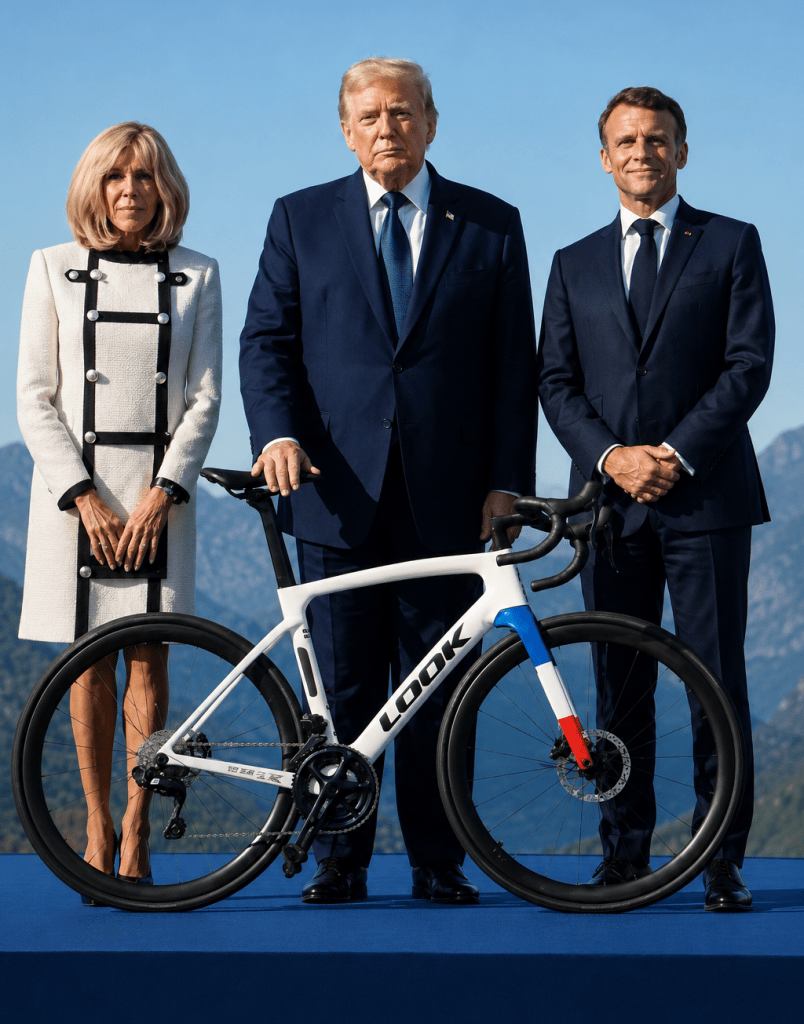
One of the more unexpected images from the recent G7 Summit in France was not a negotiation table, a communiqué, or a press conference.
It was a bicycle.
French President Emmanuel Macron reportedly presented personalized bicycles to G7 leaders, including Donald Trump. Beyond the gesture itself, the image carried an interesting message: world leaders discussing some of the most pressing geopolitical challenges of our time while receiving a symbol of sustainable and environmentally friendly mobility.
There is something almost poetic about that contrast. In a world often driven by speed, competition, and confrontation, a bicycle quietly reminds us of balance, direction, and the need to keep moving forward, one pedal stroke at a time. The symbolism is even more striking at a moment when global attention remains focused on energy security, oil markets, and the vulnerability of strategic chokepoints such as the Strait of Hormuz. While leaders grapple with geopolitical tensions, supply disruptions, and the continued centrality of fossil fuels to the global economy, the simple image of a bicycle offers a subtle reminder of both the environmental transition and the long journey still ahead.
Equally fascinating was the symbolism surrounding the meetings at the Palace of Versailles. Versailles is far more than a magnificent palace. It is one of the most significant sites in the history of diplomacy and international relations. It was there that the Treaty of Versailles was signed, a peace settlement that reshaped the international order after World War I and whose consequences continue to be debated by historians, political scientists, and international lawyers more than a century later.
Whether intentional or not, there is a certain irony in seeing contemporary leaders gathered in a place so deeply associated with the complexities of war, peace, power, and international order. The image of President Trump engaging in discussions and signing agreements in Versailles inevitably invites reflection on how history echoes through contemporary diplomacy, never repeating itself exactly, but often reappearing in unexpected forms and symbols.
Regardless of political preferences, these moments remind us that diplomacy is conducted not only through negotiations and legal texts, but also through gestures, settings, historical memory, and symbolism. Sometimes diplomacy arrives in a limousine. Sometimes it arrives on a bicycle.
And perhaps that is one of the enduring lessons of international relations: history matters, symbols matter, dialogue matters, and occasionally even a bicycle can become part of the story.
#G7 #Diplomacy #InternationalRelations #Versailles #France #ClimateAction #Sustainability #GlobalGovernance #History #RuleOfLaw #Leadership #EnvironmentalPolicy #Geopolitics
Paolo Davide Farah, Paolo Farah