

Beyond Environmental Law: Reflections on Teaching Climate Change Law
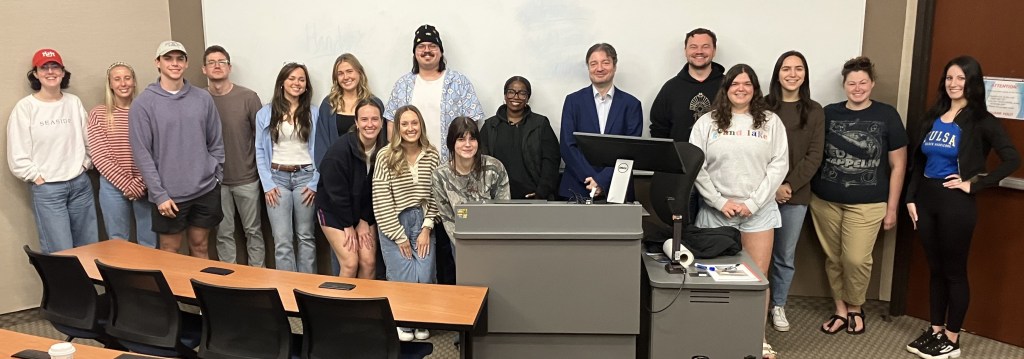
After two rounds of student presentations in my Climate Change Law course at the University of Tulsa College of Law, I found myself reflecting on a broader question: what do the topics students choose to study reveal about the future direction of climate law and governance?
One of the most rewarding aspects of teaching is watching students move beyond describing problems and begin thinking like lawyers.
Throughout the semester, students developed presentations on topics ranging from climate litigation, environmental justice, and constitutional law to technology governance, federalism, energy policy, international law, military emissions, artificial intelligence, and climate accountability.
The twenty individual research projects further expanded this range, examining issues such as climate refugees, managed retreat, PFAS contamination, climate gentrification, AI data centers, wildlife protection, federal climate authority, building codes, and the legal implications of sea-level rise.
What impressed me most was not simply the quality of the final presentations, but the intellectual process behind them.
Students learned to move:
• from policy concerns to legal analysis
• from broad societal challenges to specific doctrinal frameworks
• from normative arguments to questions of standing, causation, jurisdiction, authority, institutional competence, and remedies
They learned to ask:
- What is the legal claim?
- Who has standing?
- Which institution has authority?
- What legal rule governs the dispute?
- What remedy is realistically available?
One of the central themes of the course was that climate change cannot be understood solely through the lens of environmental law. Through our examination of constitutional law, administrative law, civil procedure, federal courts, federalism, international law, technology governance, corporate accountability, and energy regulation, students explored how climate governance increasingly operates across multiple legal fields and institutional settings.
The presentations reflected this broader framework, illustrating how climate-related challenges are often shaped by questions of authority, institutional competence, accountability, and governance that extend far beyond traditional environmental statutes.
Students also demonstrated something equally important: responsiveness to feedback. The strongest presentations were often those that evolved most significantly through discussion, revision, and reflection. The ability to refine an argument, incorporate critique, and defend a position through reasoned analysis is one of the most valuable skills future lawyers can develop.
Climate change presents some of the most complex governance challenges of our time. Preparing future lawyers to engage with those challenges requires not only substantive knowledge, but also analytical discipline, intellectual curiosity, intellectual humility, and the ability to navigate legal problems that cut across multiple fields of law and policy.
Twenty Students. Twenty Projects. One Expanding Field of Law.
I am grateful for the engagement, creativity, and hard work of all the students who participated in the course. Their work offered an encouraging glimpse into how the next generation of lawyers is approaching some of the most pressing legal and governance questions of our time.
#LegalEducation #ClimateChangeLaw #ClimateGovernance #EnvironmentalLaw #ConstitutionalLaw #AdministrativeLaw #Federalism #TechnologyLaw #EnergyLaw #InternationalLaw #LawSchool #HigherEducation #UniversityOfTulsa
Paolo Davide Farah, Paolo Farah