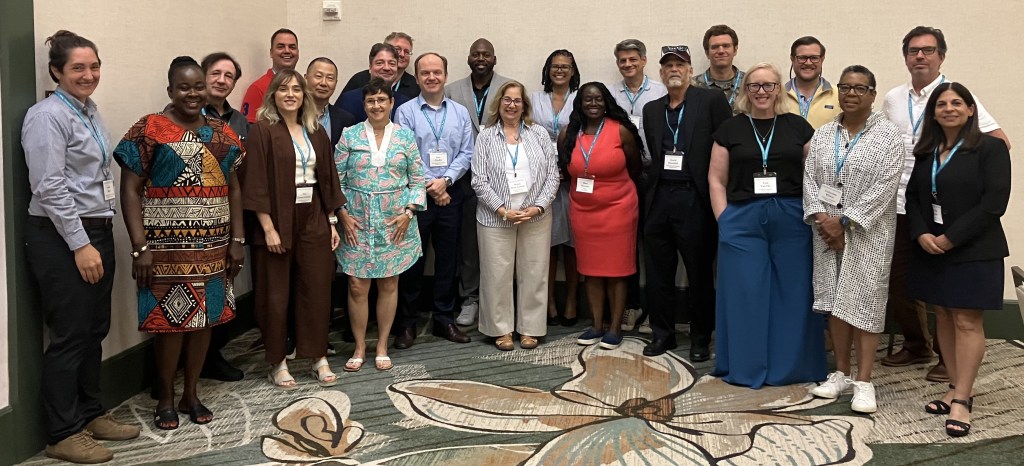

Corporate Accountability in a Fragmented World: Reflections from the 2026 Southeastern Association of Law Schools (SEALS) Annual Conference – Part 6
One of the most rewarding aspects of chairing discussion groups at the 2026 Southeastern Association of Law Schools (SEALS) Annual Conference is witnessing how scholars working in different fields approach common legal challenges from distinct methodological perspectives.
Our discussion group, Corporate Power and Accountability in Global Value Chains: Human Rights, Sustainability, Labor, and Technology, brought together participants with expertise spanning corporate law, business and human rights, securities regulation, antitrust, international law, environmental law, labor law, technology law, and comparative law. Throughout the afternoon, the conversation demonstrated that corporate accountability can no longer be understood through the lens of a single discipline. Instead, it requires dialogue across legal fields, jurisdictions, and regulatory traditions.
I opened the discussion by inviting participants to reflect on whether the business and human rights movement has entered a new phase. After decades devoted primarily to developing international standards and soft-law instruments, the central challenge today may no longer be norm creation, but implementation, monitoring, enforcement, and accountability across increasingly complex global value chains.
From that initial question, the discussion evolved in several directions.
From Human Rights Norms to Effective Implementation
One recurring theme concerned the growing gap between legal commitments and practical implementation. Participants examined whether existing corporate due diligence obligations, sustainability reporting frameworks, and voluntary standards are sufficient to improve conditions for workers and affected communities, or whether more effective enforcement mechanisms remain necessary.
Rather than questioning whether corporations should respect human rights, the discussion increasingly focused on how legal obligations can be translated into meaningful practice throughout complex international production networks.
Different Regulatory Paths: Europe and the United States
A second theme explored the increasingly divergent approaches emerging across jurisdictions.
Several participants discussed recent developments within the European Union, including mandatory corporate sustainability reporting and human rights due diligence legislation, while contrasting these developments with the more fragmented regulatory landscape in the United States.
The discussion raised broader comparative questions concerning regulatory convergence and fragmentation. Are different jurisdictions gradually moving toward common standards of corporate accountability, or are they developing distinct models reflecting different constitutional traditions, political priorities, and economic philosophies?
Technology as Both Opportunity and Challenge
Technology emerged repeatedly throughout the conversation.
Participants considered how artificial intelligence, blockchain, satellite monitoring, digital traceability systems, and automated data analysis could strengthen transparency and monitoring throughout global supply chains. At the same time, these technologies raise important questions concerning privacy, algorithmic bias, explainability, and the concentration of informational power within both public and private actors.
Rather than viewing technology as either a solution or a threat, the discussion emphasized the need to integrate technological innovation within broader legal and institutional frameworks of accountability.
Corporate Accountability Beyond Corporations
One particularly interesting aspect of the discussion examined the growing influence of actors beyond multinational corporations themselves.
Participants reflected on the expanding role played by investors, financial institutions, auditors, ESG rating agencies, certification bodies, consultants, and other private intermediaries that increasingly shape corporate behavior through market incentives rather than traditional government regulation.
This prompted broader questions concerning transparency, legitimacy, conflicts of interest, and accountability within this expanding ecosystem of private governance.
Human Rights, Competition, and Global Markets
The conversation also highlighted tensions that often receive less attention within business and human rights scholarship.
Participants explored how competition law, antitrust policy, and market concentration may interact with efforts to improve labor standards and sustainability practices. They considered whether collaboration among competitors to enhance working conditions should always be viewed through the traditional lens of competition law, or whether evolving sustainability objectives require new legal approaches.
The discussion likewise addressed how compliance costs are often transferred to smaller suppliers and producers in developing economies, raising concerns about fairness, capacity-building, and the distributional consequences of global regulatory initiatives.
An Interdisciplinary Future
Perhaps the clearest conclusion emerging from the discussion was that corporate accountability has become an inherently interdisciplinary field.
Questions concerning business and human rights now intersect with technology governance, securities regulation, environmental law, labor law, antitrust, international economic law, comparative law, and global governance. Addressing these challenges requires collaboration across legal disciplines and sustained dialogue among scholars with different methodological perspectives.
I am deeply grateful to all participants for contributing to such a thoughtful and engaging conversation. Rather than producing consensus, the discussion illustrated the richness of contemporary scholarship on corporate accountability and the importance of continuing these conversations as legal frameworks continue to evolve.
The conversation continues.
Paolo Davide Farah, Paolo Farah